
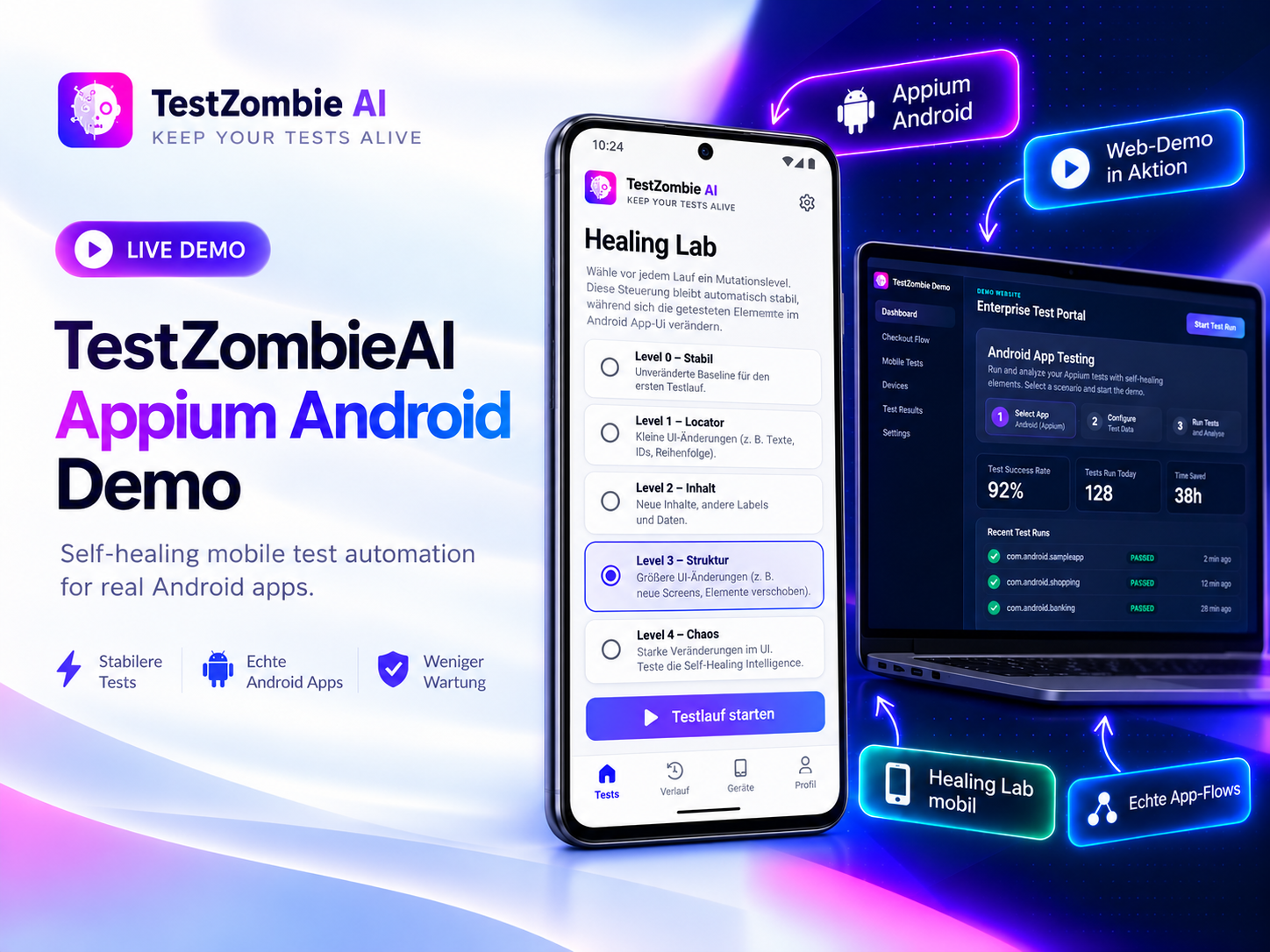
MP4 · HTTP StreamingAppium Android Demo
What you will see in this demo
1
Mobile element drift
Resource IDs, accessibility labels or hierarchies change between app versions.
2
Context-based rediscovery
TestZombie evaluates available element characteristics instead of simply replacing one selector.
3
Make the fix permanent
After a successful healing, the new locator can optionally be written into the Appium test while retaining the previous locator as a comment.
Self-Healing
The healing flow
Add healing, analysis and actionable fix recommendations to existing Selenium, Playwright and Appium tests.
Learn more about Appium Self-Healing1
Locator failsThe test can no longer find the expected UI element with its existing locator.
↓
2
TestZombie analyzes candidatesDOM or mobile element data and context are evaluated for robust alternatives.
↓
3
The test continuesWhen confidence is sufficient, the replacement is used and the result is recorded.
↓
4
The fix becomes reusableHealing history and fix recommendations help stabilize the suite permanently.
Your tests should survive change.
Add healing, analysis and actionable fix recommendations to existing Selenium, Playwright and Appium tests.